
Insights
Sports Academy Recruitment Company: Complete Guide 2026
Discover how a sports academy recruitment company transforms athlete enrollment with automated systems, safeguarding, and proven strategies.
READING TIME · 12 MIN · UPDATED QUARTERLY

The competitive landscape of sports academy enrollment has transformed dramatically in recent years. Institutions that once relied on word-of-mouth referrals and local talent scouts now face the challenge of attracting qualified athletes from regional, national, and international markets. A sports academy recruitment company specializes in building systematic approaches to identify, engage, and convert prospective student-athletes into enrolled participants. These specialized firms combine enrollment expertise with sports-specific understanding to create comprehensive recruitment strategies that fill rosters while maintaining program quality and compliance standards.
Understanding the Modern Sports Academy Recruitment Landscape
The role of a sports academy recruitment company extends far beyond traditional marketing. These organizations develop integrated systems that address every stage of the athlete enrollment journey, from initial awareness through final commitment. Unlike general educational marketing agencies, they understand the unique dynamics of athletic recruitment, including compliance requirements, talent assessment protocols, and the specific concerns of parents evaluating sports-focused educational opportunities.
Today's sports academies face unprecedented competition for qualified athletes. Families have access to more information than ever before, researching programs across multiple states or countries before making enrollment decisions. A specialized recruitment partner brings structured methodologies that ensure consistent inquiry flow, rapid response times, and personalized nurturing sequences tailored to the athlete recruitment cycle.
Key Components of Effective Sports Academy Recruitment
Successful recruitment programs integrate several essential elements working in concert:
- Automated inquiry management systems that capture leads 24/7 and trigger immediate responses
- Compliance frameworks aligned with governing body regulations and safeguarding standards
- Multi-channel outreach strategies incorporating digital advertising, content marketing, and relationship building
- Data-driven targeting to identify prospects matching specific athletic and academic profiles
- Nurture sequences designed around the extended decision-making timeline typical in sports education
The Official NCAA overview of recruiting rules provides essential context for academies preparing athletes for collegiate competition, illustrating the complexity of compliance requirements that recruitment systems must address.
The Technology Infrastructure Behind Modern Recruitment
A sports academy recruitment company builds its effectiveness on robust technological foundations. These systems automate repetitive tasks while enabling personalized communication at scale. The infrastructure typically includes customer relationship management (CRM) platforms configured specifically for enrollment workflows, marketing automation tools that trigger contextually relevant messages, and analytics dashboards providing real-time visibility into recruitment metrics.
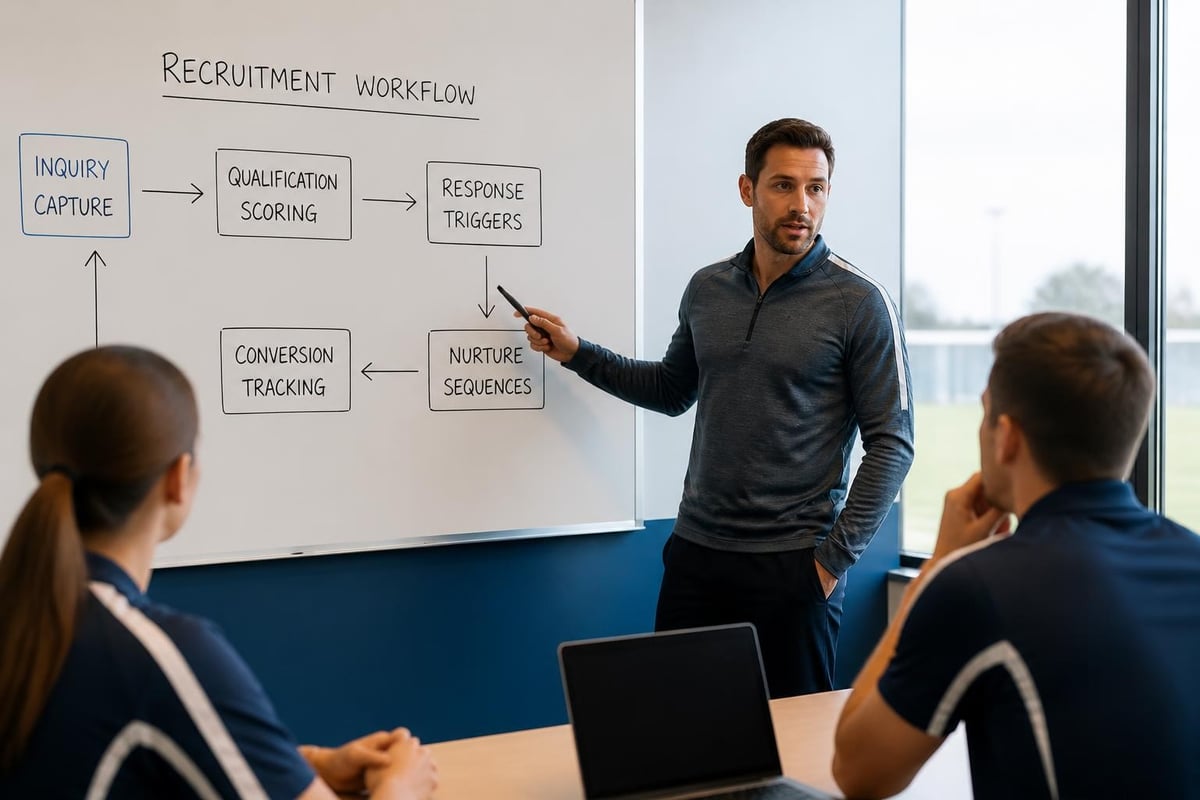
Many academies struggle with inquiry leakage, where interested families fail to receive timely responses or fall through communication gaps. Automated systems eliminate these vulnerabilities by ensuring every inquiry receives immediate acknowledgment, appropriate follow-up sequences, and escalation protocols when prospects demonstrate high engagement or qualification scores.
Building Your Virtual Enrollment Team
The concept of a virtual enrollment team represents a paradigm shift in how academies approach recruitment. Rather than relying exclusively on internal staff managing inquiries alongside other responsibilities, specialized sports academy marketing agencies provide dedicated systems and expertise focused entirely on enrollment growth.
This model offers several advantages:
- Consistency: Automated systems apply the same high-quality processes to every inquiry regardless of timing or volume
- Scalability: Infrastructure expands seamlessly during peak inquiry periods without additional hiring
- Expertise: Access to specialized knowledge in sports academy enrollment without building internal capabilities
- Measurement: Comprehensive analytics revealing which recruitment activities generate qualified applications
The virtual team approach integrates seamlessly with existing admission staff, handling initial inquiry management and nurturing while enabling counselors to focus on high-value activities like campus tours, trial sessions, and final enrollment conversations.
Safeguarding and Compliance in Sports Recruitment
Any discussion of sports academy recruitment must address safeguarding as a foundational priority. Working with young athletes requires rigorous adherence to child protection standards, safer recruitment practices, and ongoing welfare monitoring. A responsible sports academy recruitment company integrates these requirements throughout recruitment processes rather than treating them as administrative afterthoughts.
NSPCC Sport's Standards for safeguarding provides comprehensive guidance for organizations developing recruitment protocols that prioritize athlete safety. These frameworks inform how recruitment companies structure inquiry processes, design trial session protocols, and train staff on recognition and response procedures.
International Safeguarding Frameworks
For academies recruiting internationally, UNICEF's International Safeguards for Children in Sport offers globally recognized principles applicable across diverse regulatory environments. Sports academy recruitment companies serving international markets must navigate varying legal requirements while maintaining consistent high standards for athlete protection.
Effective recruitment systems incorporate safeguarding checkpoints throughout the enrollment journey:
- Background screening protocols for all staff interacting with prospective athletes
- Transparent communication about supervision ratios and welfare policies
- Parent education regarding academy safeguarding commitments
- Clear reporting mechanisms for concerns raised during recruitment
- Regular auditing of recruitment practices against established standards
Sport England's safeguarding guidance helps schools and leisure providers understand their statutory responsibilities, providing another valuable resource for academies developing compliant recruitment frameworks.
Strategic Talent Identification and Development
Beyond filling enrollment slots, sophisticated sports academy recruitment companies help institutions identify athletes with genuine development potential aligned to program philosophies. This strategic approach requires understanding talent identification methodologies, developmental pathways, and long-term athlete progression models.
Research on talent identification and development presents evidence-based recommendations that inform modern recruitment practices. Rather than relying exclusively on current performance metrics, advanced recruitment systems evaluate developmental indicators, athletic potential, and program fit factors that predict long-term success.
| Recruitment Approach | Focus | Timeline | Success Metric |
|---|---|---|---|
| Traditional | Current performance | Immediate | Roster fill rate |
| Strategic | Development potential | Multi-year | Athlete progression |
| Hybrid | Performance + potential | Short and long-term | Enrollment quality + quantity |
This strategic orientation particularly benefits academies emphasizing athlete development over immediate competitive results. The recruitment messaging, targeting criteria, and qualification frameworks all align to attract families valuing long-term growth rather than quick wins.
Data-Driven Recruitment Strategies
Modern sports academy recruitment leverages sophisticated data analytics to optimize performance continuously. A specialized sports academy recruitment company implements comprehensive tracking across the entire enrollment funnel, measuring metrics from initial impression through final enrollment and revealing exactly which activities generate qualified applications.

Essential Recruitment Metrics to Track
Effective measurement requires monitoring both leading and lagging indicators:
Top-of-Funnel Metrics:
- Inquiry volume by source channel
- Cost per inquiry across marketing investments
- Inquiry quality scores based on fit criteria
- Geographic distribution of prospects
Mid-Funnel Metrics:
- Response time from inquiry to first contact
- Engagement rates with nurture communications
- Trial session attendance rates
- Application submission rates
Bottom-Funnel Metrics:
- Application-to-enrollment conversion
- Enrollment cost per athlete
- Revenue per enrolled student
- Retention rates by recruitment source
These metrics enable continuous optimization, revealing which recruitment channels deliver the highest quality prospects, which messaging resonates most effectively, and where process improvements generate the greatest enrollment impact.
Automated Nurture Sequences for Sports Academies
The extended decision timeline typical in sports academy enrollment creates unique nurturing requirements. Families often research options for six to twelve months before making final commitments. During this period, maintaining consistent engagement without overwhelming prospects requires carefully designed communication sequences.
A sports academy recruitment company develops automated nurture tracks that deliver value throughout the consideration journey:
- Immediate response phase: Welcome sequences providing essential information and setting expectations
- Education phase: Content addressing common questions about training methodologies, academic integration, athlete welfare, and program outcomes
- Engagement phase: Invitations to trial sessions, virtual tours, or parent information events
- Decision support phase: Personalized communications addressing specific family concerns or interests
- Conversion phase: Application guidance, financial aid information, and enrollment logistics
Each sequence branches based on prospect behavior, ensuring communications remain relevant to current interest levels and specific concerns. Parents researching international boarding options receive different content than local families evaluating day programs, while prospects at different age categories encounter age-appropriate messaging.
Multi-Channel Marketing for Sports Academy Recruitment
Effective recruitment requires integrated presence across channels where prospective families research options and make decisions. A comprehensive sports academy recruitment company coordinates activities across digital advertising, organic search, social media, content marketing, email, and traditional outreach to create consistent touchpoints throughout the enrollment journey.
Digital Advertising Strategies
Paid advertising enables precise targeting of families matching ideal athlete profiles. Advanced campaigns leverage:
- Geographic targeting for local, regional, or national recruitment zones
- Demographic filters aligning with target age ranges and family characteristics
- Interest-based targeting reaching families engaged with specific sports or activities
- Remarketing campaigns re-engaging website visitors who haven't yet inquired
- Video advertising showcasing training environments, athlete testimonials, and program differentiators
The enrollment growth systems provided by specialized firms integrate advertising with comprehensive conversion infrastructure, ensuring paid traffic flows into optimized landing pages and automated follow-up sequences that maximize return on advertising investment.
Content Marketing and Organic Visibility
While paid advertising generates immediate inquiry flow, content marketing builds long-term visibility and authority. Sports academies benefit from educational content addressing:
- Training methodology explanations helping parents understand program approaches
- Athlete development pathways showing progression opportunities
- Academic integration models demonstrating educational commitment
- Nutrition and sports science education building confidence in holistic support
- Success stories and alumni outcomes proving program effectiveness
This content serves dual purposes, attracting organic search traffic while providing valuable resources for nurture sequences and inquiry follow-up communications.
Geographic Strategy in Youth Player Recruitment
Recent research on youth player recruitment geostrategy illustrates how international academies develop sophisticated geographic targeting approaches balancing talent density, competitive intensity, and market access. These strategic frameworks inform where recruitment investments generate optimal returns.

Sports academy recruitment companies help institutions develop geographic strategies aligned with their competitive positioning, program capacity, and growth objectives. A local academy might focus intensively on a 50-mile radius with selective regional outreach, while an elite international program invests in multiple countries simultaneously.
| Geographic Scope | Investment Level | Expected Conversion | Strategic Purpose |
|---|---|---|---|
| Local (0-50 miles) | High touch, moderate cost | 15-25% | Core enrollment base |
| Regional (50-200 miles) | Moderate touch, selective | 8-15% | Growth and competition |
| National (200+ miles) | Lower touch, targeted | 4-10% | Elite talent and reputation |
| International | High touch, high cost | 5-12% | Diversity and prestige |
Geographic strategy also influences marketing channel selection, messaging approaches, and enrollment support requirements. International recruitment demands robust boarding infrastructure and visa support capabilities that local programs may not require.
Integration with Academic Enrollment Processes
Sports academies rarely operate purely as athletic organizations. Most integrate academic programming requiring coordination between athletic recruitment and academic admissions. A sports academy recruitment company experienced in educational enrollment understands these integration requirements and designs systems accommodating dual evaluation criteria.
The recruitment process must address both athletic suitability and academic preparedness. Some academies maintain separate admissions teams for athletics and academics, requiring coordinated communication to provide families with unified information. Others integrate evaluation within single admissions offices. Regardless of structure, recruitment systems must capture both athletic and academic qualification data, enabling appropriate routing and evaluation.
Families evaluating sports academies frequently have questions spanning both domains. Effective nurture sequences address athletic development alongside academic quality, university placement support, and balanced lifestyle considerations that transcend pure sports performance.
Financial Modeling and Enrollment Economics
Understanding the economics of sports academy recruitment enables informed investment decisions and sustainable growth strategies. A specialized sports academy recruitment company provides transparency into acquisition costs, lifetime value projections, and return on enrollment investment metrics that justify marketing expenditures.
Key Economic Considerations
Cost per Enrolled Athlete: The total recruitment investment required to secure one enrolled student, including advertising costs, system expenses, and personnel allocation. Elite academies with selective admission might invest $2,000-$5,000 per enrolled athlete, while less selective programs target $500-$1,500 ranges.
Lifetime Value: The total revenue an enrolled athlete generates throughout their academy tenure. This calculation must account for multi-year enrollments, potential family referrals, and alumni engagement that may generate future enrollment or philanthropic support.
Return on Investment: The ratio between recruitment costs and generated revenue. Sustainable programs typically target 3:1 to 5:1 returns, meaning every dollar invested in recruitment generates three to five dollars in tuition revenue.
Understanding these economics helps academies make strategic decisions about acceptable acquisition costs, appropriate investment in recruitment infrastructure, and sustainable growth rates that maintain financial health while expanding enrollment.
Technology Stack for Modern Sports Academy Recruitment
Effective recruitment requires integrating multiple technology platforms into cohesive systems that automate workflows while maintaining personalization. A comprehensive sports academy recruitment company configures and manages this technology infrastructure, ensuring optimal performance without requiring internal technical expertise.
Essential Technology Components:
- Customer Relationship Management (CRM) configured for enrollment workflows
- Marketing automation platform managing email sequences and behavioral triggers
- Landing page and form builders optimized for mobile conversion
- Advertising management tools coordinating campaigns across platforms
- Analytics dashboards providing real-time recruitment performance visibility
- Calendar scheduling systems facilitating tour and trial session bookings
- Communication platforms enabling text, email, and voice outreach
- Document management for application materials and enrollment paperwork
These systems integrate through application programming interfaces (APIs) that enable data flow between platforms, creating unified prospect records and eliminating manual data entry. The school admissions automation capabilities of specialized providers ensure these integrations function reliably without ongoing technical maintenance.
Building Trust Through Transparent Communication
Sports academy recruitment succeeds when families develop confidence in program quality, athlete welfare commitments, and organizational integrity. A sports academy recruitment company builds trust through transparent communication addressing common concerns proactively rather than waiting for families to raise questions.
Effective trust-building communication addresses:
Safety and Supervision: Detailed explanations of safeguarding policies, supervision ratios, background screening processes, and welfare monitoring systems
Training Philosophy: Clear articulation of developmental approaches, progression pathways, and how training intensity balances with age-appropriate development
Academic Integration: Specific information about academic standards, university placement support, and how training schedules accommodate educational requirements
Financial Transparency: Straightforward explanations of total costs, payment options, refund policies, and financial aid availability
Outcome Evidence: Honest presentation of athlete progression data, university placement rates, and realistic expectations about professional pathway percentages
This transparency differentiates quality programs from competitors making unrealistic promises or avoiding difficult questions. Families investing significant resources in sports academy enrollment value honesty that helps them make informed decisions aligned with their athlete's best interests.
Measuring Recruitment Quality Beyond Volume
While inquiry and enrollment volume provide important metrics, sophisticated sports academy recruitment companies also measure quality indicators ensuring growth aligns with program standards and institutional mission. Quality metrics prevent the degradation that sometimes accompanies aggressive enrollment expansion.
Qualification Match Rate: The percentage of enrolled athletes meeting predefined qualification criteria across athletic ability, academic preparedness, family engagement, and program fit dimensions.
Retention Rates: The proportion of enrolled athletes completing full program durations rather than departing prematurely. High attrition suggests recruitment attracted families with unrealistic expectations or insufficient fit.
Performance Progression: Tracking athletic development throughout academy tenure, ensuring recruitment attracts athletes with genuine development potential rather than exclusively current high performers.
Family Satisfaction: Measuring parent and athlete satisfaction through regular surveys, identifying whether recruitment messaging aligned with delivered experiences.
Cultural Fit: Assessing how well recruited athletes integrate into program culture, contribute positively to team dynamics, and embody institutional values.
These quality metrics complement volume indicators, enabling academies to pursue growth while maintaining program integrity and athlete development focus.
Seasonal Planning and Recruitment Cycles
Sports academy recruitment follows seasonal patterns influenced by academic calendars, competitive seasons, and family decision-making timelines. A specialized sports academy recruitment company develops annual recruitment calendars coordinating activities with these natural cycles to optimize inquiry flow and conversion rates.
Peak Inquiry Periods:
- January-March: Families researching options for fall enrollment
- September-October: International families planning ahead for following academic year
- Post-season periods: Athletes and families evaluating options after competitive seasons conclude
Recruitment campaigns intensify during these high-intent periods while maintaining consistent presence during slower months to capture year-round inquiries. Marketing budgets concentrate during peak seasons when conversion rates justify higher acquisition costs, while more modest investments during off-peak periods maintain visibility without excessive spending.
Trial session scheduling, information event planning, and enrollment deadline communications all coordinate with these seasonal rhythms. Understanding these patterns enables efficient resource allocation and prevents missed opportunities during critical decision windows.
Successfully recruiting qualified athletes requires specialized expertise, sophisticated systems, and consistent execution that most academies struggle to maintain internally. The strategic frameworks, technological infrastructure, and proven methodologies that sports academy recruitment companies provide transform enrollment from an uncertain challenge into a predictable, scalable system. Whether your academy serves local athletes or recruits internationally, partnering with enrollment specialists who understand the unique dynamics of sports education delivers the qualified inquiries and applications essential for sustainable growth. ScholarSurge provides comprehensive enrollment growth systems specifically designed for sports academies, guaranteeing increased qualified inquiries through automated processes, rapid response protocols, and strategic nurturing that converts interested families into enrolled athletes.