Insights
Education Recruitment Marketing Company Guide 2026
Discover how an education recruitment marketing company drives enrollment growth through proven strategies, automation, and data-driven systems.
READING TIME · 12 MIN · UPDATED QUARTERLY

Educational institutions face unprecedented challenges in 2026. Demographic shifts, increased competition, and evolving student expectations demand sophisticated marketing approaches that traditional admissions teams struggle to execute alone. An education recruitment marketing company bridges this gap by deploying specialized systems, automation, and proven strategies that transform prospective inquiries into enrolled students. These partnerships enable schools, colleges, universities, and sports academies to achieve predictable enrollment growth while freeing internal teams to focus on relationship-building and campus experience.
The Strategic Value of Specialized Education Recruitment Partners
The education sector has fundamentally changed. Generic marketing tactics no longer deliver the qualified inquiry volumes institutions need to maintain healthy enrollment pipelines. According to comprehensive research on undergraduate recruitment practices, institutions that implement data-driven, multi-channel approaches see significantly higher conversion rates from inquiry to application.
An education recruitment marketing company brings specialized expertise that most in-house teams cannot replicate. These firms understand the nuances of different educational segments-from K-12 private schools to Division I athletics programs-and tailor strategies accordingly. The value extends beyond campaign execution to include system architecture, automation infrastructure, and performance optimization.
Multi-Segment Expertise Across Educational Verticals
Different institution types require fundamentally different approaches. A boarding school markets experiential learning and character development, while a graduate business program emphasizes ROI and career advancement. Sports academies must balance athletic development messaging with academic credentials.
Key differentiation areas include:
- Messaging frameworks aligned to segment-specific decision drivers
- Channel mix optimization based on audience demographics and behavior
- Inquiry-to-enrollment conversion tactics suited to each institution type
- Compliance considerations varying by educational level and geography
ScholarSurge's K-12 enrollment systems demonstrate how specialized approaches drive results. Rather than applying generic tactics, effective partners develop custom frameworks that reflect each institution's unique value proposition and target audience characteristics.
Data-Driven Targeting and Audience Development
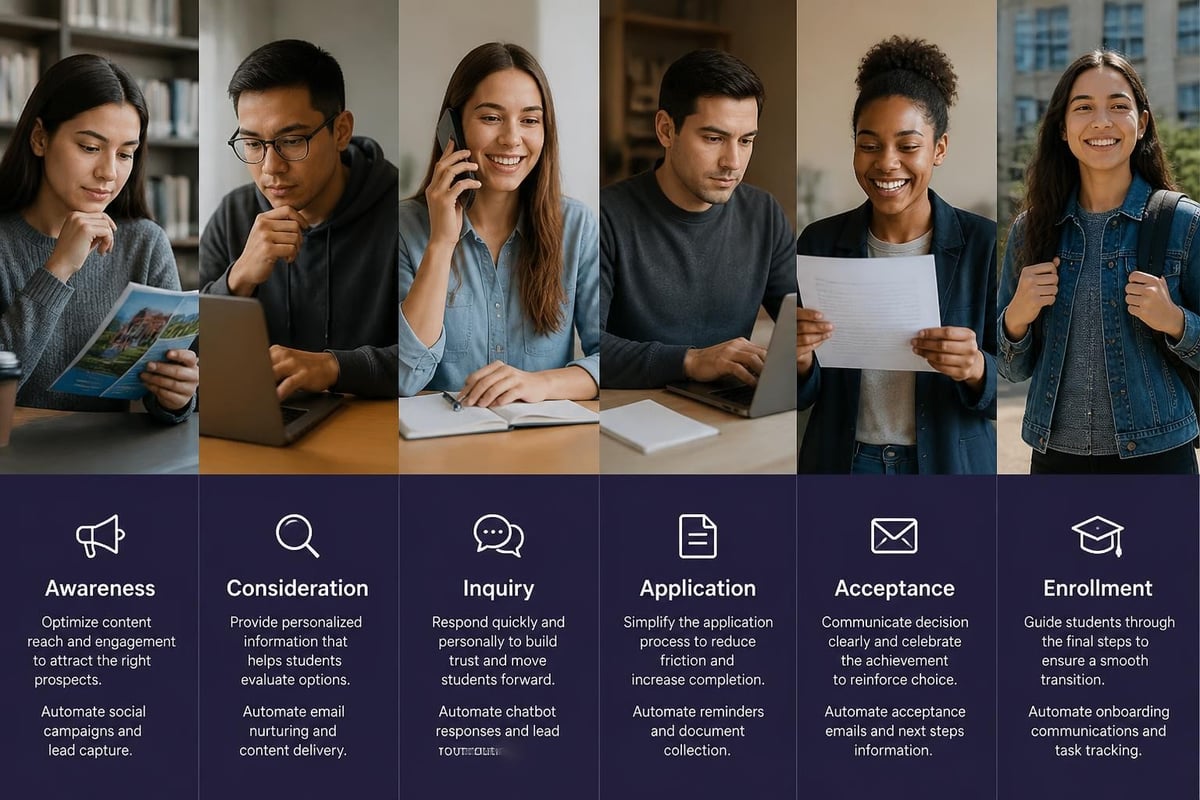
Modern education recruitment depends on precise audience identification and segmentation. An education recruitment marketing company leverages multiple data sources to build comprehensive prospect profiles that enable personalized outreach at scale.
The foundation starts with demographic and psychographic research. Understanding family income levels, geographic concentration, academic performance indicators, and extracurricular interests allows for hyper-targeted campaign development. Current college search trends reveal that prospective students expect personalized communication that addresses their specific circumstances and aspirations.
First-Party Data Infrastructure and CRM Integration
Effective recruitment marketing requires robust data infrastructure. Leading firms implement comprehensive customer relationship management (CRM) systems that track every interaction across the enrollment funnel. This creates visibility into campaign performance, identifies bottlenecks, and enables continuous optimization.
| Data Category | Application | Optimization Impact |
|---|---|---|
| Behavioral signals | Website engagement tracking | 40-60% improved nurturing relevance |
| Demographic attributes | Audience segmentation | 35-50% better targeting efficiency |
| Interaction history | Personalization triggers | 25-40% higher conversion rates |
| Academic qualifications | Fit scoring and prioritization | 30-45% improved yield rates |
Integration with admissions systems ensures seamless data flow. When inquiry forms connect directly to CRM platforms, automated workflows trigger immediately. This infrastructure enables the rapid response protocols that modern families expect. Education lead generation systems demonstrate how proper technical architecture supports enrollment growth objectives.
Privacy-Compliant Data Use and Student Protection
Data sophistication must balance with ethical obligations. Student privacy guidance from the Department of Education establishes clear parameters for data collection, storage, and use in educational contexts. An education recruitment marketing company navigates these requirements while maximizing marketing effectiveness.
Compliance considerations include:
- Obtaining appropriate consent for communication and data use
- Implementing security measures protecting personally identifiable information
- Establishing data retention and deletion policies aligned with regulations
- Creating transparent disclosures about data collection and usage
- Training staff on privacy obligations and best practices
Multi-Channel Campaign Architecture and Execution
Prospective students and families engage across numerous touchpoints before making enrollment decisions. An education recruitment marketing company orchestrates campaigns across paid search, social media, display advertising, email, SMS, and traditional channels to create comprehensive coverage.
Research on 2025 higher education marketing trends highlights the growing importance of video content, AI-driven personalization, and mobile-first experiences. Successful campaigns integrate these elements while maintaining consistent messaging across platforms.
Paid Media Strategies and Budget Allocation
Digital advertising forms the foundation of most modern recruitment efforts. Strategic paid media campaigns generate awareness, drive qualified traffic, and support retargeting initiatives throughout the enrollment cycle.
Effective channel distribution typically includes:
- Search advertising capturing high-intent queries related to program types, locations, and specific offerings
- Social media campaigns on platforms where target audiences actively engage (Facebook, Instagram, TikTok, LinkedIn)
- Display remarketing maintaining visibility among prospects who have shown initial interest
- Video advertising showcasing campus experiences, student testimonials, and program highlights
- Programmatic targeting reaching specific demographic and psychographic segments across the web
Budget allocation depends on institutional goals, market competitiveness, and historical performance data. Sports academy marketing strategies often emphasize visual platforms like Instagram and YouTube, while graduate programs may invest more heavily in LinkedIn and search.
Content Marketing and Thought Leadership
Beyond paid promotion, content development establishes institutional authority and addresses prospect questions throughout their research process. An education recruitment marketing company develops comprehensive content strategies that serve multiple funnel stages.
Blog articles, downloadable guides, webinar series, and video libraries provide value while capturing contact information and advancing prospects toward application. This approach proves particularly effective for longer consideration cycles common in boarding schools and higher education programs.

Automation Systems for Inquiry Management and Nurturing
The period between initial inquiry and application submission represents the highest opportunity for optimization. Most institutions lose substantial prospects during this phase due to slow response times, inconsistent follow-up, and generic communication.
An education recruitment marketing company implements automated systems that ensure rapid, personalized engagement at scale. These workflows trigger based on specific actions, time intervals, and prospect characteristics, delivering relevant information precisely when families need it.
Rapid Response Protocols and First-Touch Optimization
Research consistently shows that response speed dramatically impacts conversion rates. Prospects who receive immediate acknowledgment and relevant information are significantly more likely to advance through the enrollment funnel. Emerging recruitment trends emphasize the competitive advantage of instant engagement.
Automated response systems achieve this through:
- Instant email acknowledgment upon form submission with personalized next steps
- SMS notifications providing immediate confirmation and direct contact options
- Calendar integration enabling self-service appointment scheduling
- Intelligent routing directing inquiries to appropriate admissions team members
- CRM updates triggering human follow-up tasks for high-priority prospects
School admissions automation demonstrates how technology accelerates response while maintaining the personal touch families expect.
Segmented Nurturing Campaigns and Behavioral Triggers
Following initial contact, sustained nurturing keeps institutions top-of-mind while educating prospects about program benefits. An education recruitment marketing company designs multi-touch sequences that adapt based on engagement and behavior.
| Nurture Sequence Type | Duration | Primary Channels | Conversion Impact |
|---|---|---|---|
| General inquiry nurture | 4-6 weeks | Email, SMS | 15-25% application rate |
| Event follow-up | 2-3 weeks | Email, phone, SMS | 30-40% application rate |
| Application abandonment | 1-2 weeks | Email, SMS, retargeting | 20-35% completion rate |
| Accepted student yield | 8-12 weeks | Email, mail, events | 10-20% deposit increase |
Behavioral triggers add sophistication. When a prospect downloads a specific guide, visits the tuition page multiple times, or watches a campus tour video, automated workflows deliver relevant follow-up content. This responsiveness creates the impression of personalized attention even at scale.
Performance Measurement and Continuous Optimization
Accountability separates effective education recruitment marketing companies from generalist agencies. Sophisticated measurement frameworks track performance from initial impression through enrollment, enabling data-driven optimization and transparent reporting.
Funnel Metrics and Conversion Rate Analysis
Understanding conversion rates at each funnel stage identifies optimization opportunities. An education recruitment marketing company establishes baseline metrics, sets improvement targets, and implements testing protocols to drive continuous gains.
Critical metrics include:
- Impression-to-click rate: Measuring ad creative and targeting effectiveness
- Click-to-inquiry rate: Evaluating landing page performance and offer relevance
- Inquiry-to-application rate: Assessing nurture effectiveness and sales process quality
- Application-to-acceptance rate: Understanding competitive positioning and selectivity
- Acceptance-to-enrollment rate: Measuring yield and institutional attractiveness
Higher education enrollment marketing requires particularly sophisticated measurement given longer sales cycles and multiple stakeholder involvement. Effective partners implement attribution modeling that credits touchpoints appropriately across extended timelines.
A/B Testing Protocols and Experimentation Frameworks
Continuous improvement demands systematic testing. An education recruitment marketing company runs ongoing experiments across landing pages, email subject lines, ad creative, call-to-action language, and form designs.
Testing discipline includes:
- Hypothesis development based on data analysis and best practices
- Controlled experiment design isolating single variables
- Statistical significance calculations ensuring valid conclusions
- Winner implementation and documentation
- Iterative testing building on previous learnings
This scientific approach compounds gains over time. Even modest 5-10% improvements across multiple conversion points yield substantial enrollment increases when compounded across the entire funnel.

Technology Stack Integration and System Architecture
Modern enrollment marketing depends on sophisticated technology infrastructure. An education recruitment marketing company implements and integrates tools that enable automation, personalization, tracking, and reporting at scale.
The technology ecosystem typically includes customer relationship management platforms, marketing automation software, analytics tools, call tracking systems, chatbot technology, and appointment scheduling solutions. For sports academies specifically, custom cycling apparel and equipment suppliers like CCN Sport can integrate with merchandise systems to offer branded gear that reinforces institutional identity and creates additional touchpoints with prospects.
CRM Platform Selection and Configuration
The CRM serves as the system of record for all prospect interactions. Leading platforms for education include Salesforce Education Cloud, Slate by Technolutions, and HubSpot configured for admissions workflows. Proper implementation requires:
- Custom field architecture capturing education-specific data points
- Automated workflows triggering based on prospect actions and characteristics
- Integration with website forms, chat systems, and communication platforms
- Reporting dashboards providing visibility into pipeline health and performance
- Role-based permissions ensuring appropriate team member access
Private school enrollment agencies often implement simpler systems than large universities, but the fundamental principles remain consistent. The platform must support rapid follow-up, personalized communication, and comprehensive tracking regardless of institutional size.
Marketing Automation and Communication Tools
Beyond the CRM, specialized marketing automation platforms enable sophisticated nurturing campaigns. These systems manage multi-channel sequences, implement behavioral triggers, and personalize content at scale.
Email marketing platforms must handle segmentation, A/B testing, deliverability optimization, and compliance with CAN-SPAM and GDPR requirements. SMS capabilities increasingly complement email, particularly for time-sensitive communications and reminders. International school recruitment strategies often leverage WhatsApp given its global penetration and preference in many markets.
Specialized Approaches for Different Educational Segments
While fundamental recruitment marketing principles apply broadly, effective execution requires segment-specific customization. An education recruitment marketing company adapts strategies, messaging, channels, and tactics based on institution type and target audience characteristics.
K-12 Private and Independent Schools
Private school recruitment targets families making significant financial commitments for elementary through high school education. Decision drivers include academic rigor, class size, values alignment, extracurricular offerings, and college preparation. Marketing agencies for private schools emphasize community, tradition, and individual attention.
Effective campaigns highlight:
- Teacher credentials and student-faculty ratios
- College acceptance outcomes and scholarship achievement
- Arts, athletics, and enrichment programming
- Campus safety and pastoral care systems
- Alumni networks and legacy families
Geographic targeting typically focuses on local and regional markets, with boarding schools expanding nationally and internationally. Open house events, campus tours, and shadow days serve as critical conversion points requiring sophisticated registration and follow-up systems.
Higher Education Institutions
Colleges and universities face intense competition for a shrinking demographic pool. College enrollment agencies must differentiate institutions while addressing financial aid concerns, career outcomes, and campus culture.
Program-level marketing proves increasingly important. Graduate programs, continuing education, and online offerings each require distinct approaches. Best higher education marketing strategies emphasize outcomes data, faculty expertise, and career services infrastructure.
| Institution Type | Primary Differentiators | Key Channels | Typical Inquiry-to-Enrollment Timeline |
|---|---|---|---|
| Community colleges | Affordability, transfer pathways | Search, local advertising | 2-4 months |
| Liberal arts colleges | Small classes, undergraduate focus | Social media, campus visits | 6-12 months |
| Research universities | Faculty, facilities, reputation | Search, rankings, publications | 8-18 months |
| Graduate programs | ROI, career advancement, flexibility | LinkedIn, search, industry partnerships | 3-9 months |
Sports Academies and Specialized Training Programs
Sports academies combine athletic development with academic programming, requiring dual messaging that appeals to both competitive aspirations and educational priorities. Sports academy marketing agencies showcase coaching credentials, alumni achievement, facilities, and competitive schedules.
Visual content dominates in this segment. Highlight videos, training footage, facility tours, and athlete testimonials drive engagement. Sports equipment partnerships, such as custom team jerseys from My Size Jersey or specialized tennis gear from Mantis, can enhance program prestige and create additional marketing touchpoints showcasing professionalism and quality.
Sports academy recruitment priorities include:
- Coaching staff experience and playing backgrounds
- Alumni professional placement and college commitments
- Training methodologies and competitive philosophy
- Facility quality and equipment standards
- Academic support and college preparation
- Tournament schedules and competitive opportunities
Social proof proves particularly powerful. Testimonials from current athletes and parents, college commitment announcements, and championship achievements build credibility and attract quality prospects. Sports academy enrollment strategies leverage these elements across paid advertising, organic content, and direct outreach.
Partner Selection Criteria and Evaluation Framework
Choosing the right education recruitment marketing company significantly impacts enrollment outcomes. Institutions should evaluate potential partners across multiple dimensions to ensure alignment and capability.
Industry Experience and Educational Specialization
Generic marketing agencies lack the sector-specific knowledge required for effective education recruitment. Look for partners with demonstrated experience in your specific segment. An agency that excels with boarding school marketing may not understand community college dynamics or sports academy culture.
Request case studies, client references, and performance data from similar institutions. Understand their team composition, including whether they employ former admissions professionals who bring insider perspective on enrollment processes and family decision-making.
Technology Capabilities and System Integration
Partner technology infrastructure must align with your existing systems or provide superior alternatives. Evaluate their CRM platform, marketing automation tools, analytics capabilities, and integration experience. Poor technology choices create data silos, manual workarounds, and limited visibility.
Ask detailed questions about:
- Data migration processes and timeline expectations
- Integration capabilities with existing admissions and student information systems
- Reporting dashboards and performance visibility
- Training and ongoing support for internal teams
- System scalability as programs grow
Performance Guarantees and Accountability Models
The most confident education recruitment marketing companies offer performance guarantees or results-based pricing models. These arrangements align incentives and demonstrate partner commitment to outcomes rather than just activity.
Small private college enrollment partnerships often include minimum inquiry volume guarantees, conversion rate targets, or cost-per-enrollment caps. Understand exactly what's guaranteed, measurement methodology, and recourse if targets aren't met.
Implementation Timeline and Change Management
Successful partnerships require structured implementation and effective change management. An education recruitment marketing company should provide clear project plans, training programs, and transition support to minimize disruption and accelerate results.
Onboarding Process and System Migration
Initial implementation typically requires 4-8 weeks depending on complexity. This period includes strategy development, system configuration, content creation, campaign setup, and team training. Expect intensive collaboration during this phase.
Key onboarding milestones include:
- Discovery workshops defining goals, audiences, messaging, and success metrics
- Data audit and migration planning for existing prospect information
- Technology implementation including CRM setup and integration testing
- Campaign development creating initial ads, landing pages, and nurture sequences
- Team training ensuring internal staff can use systems effectively
- Launch preparation with quality assurance testing across all systems
- Go-live execution with close monitoring and rapid iteration
Change management proves critical, particularly in institutions with established processes. An education recruitment marketing company should facilitate buy-in across admissions teams, institutional leadership, and other stakeholders affected by new systems and workflows.
Continuous Improvement Cycles and Quarterly Planning
Following launch, establish regular optimization cycles. Most effective partnerships implement monthly performance reviews, quarterly strategic planning sessions, and annual comprehensive assessments.
These reviews analyze funnel performance, identify improvement opportunities, allocate budget adjustments, and refine targeting and messaging. The discipline of regular evaluation ensures sustained focus on results and prevents complacency as initial gains plateau.
Modern educational institutions require sophisticated recruitment marketing systems to achieve enrollment goals in increasingly competitive markets. An education recruitment marketing company provides specialized expertise, proven methodologies, and technology infrastructure that most internal teams cannot replicate independently. By implementing data-driven targeting, multi-channel campaigns, intelligent automation, and continuous optimization, these partnerships transform inquiry pipelines into predictable enrollment outcomes. ScholarSurge specializes in enrollment growth systems for schools, colleges, universities, and sports academies, guaranteeing increased qualified inquiries and applications through comprehensive automation, rapid response protocols, and strategic nurturing that fills programs to capacity.